Development Studies Association
Connecting and promoting the development research community
Conference Home
Programme
Parallel session information
Registration & Fees
Travel & Accommodation
Annual Conference 2004
Annual Conference 2005
Annual Conference 2006
Annual Conference 2007

DSA Annual Conference November 2008

DEVELOPMENT’S INVISIBLE HANDS

Saturday 8th November 2008
Church House, Westminster, London  

RESEARCH STUDENT BURSARIES: DEADLINE FOR SUBMISSION OF ABSTRACTS - 30th JUNE 2008 
(download information on how to submit for research student bursaries here)

REGISTRATION NOW OPEN - Please visit the Registration and Fees page

Call for Papers

Cities in an Insecure World Panel

Some of the most intractable and enduring challenges of development are concerned with reducing insecurity. Early and very current development debates have been concerned with issues of food security. Ensuring sustainable economic development and livelihoods in the context of volatile global markets is another enduring preoccupation of development, as are efforts to guarantee social security or protection. Concern about the relationship between national and human security has been at the centre of recent development debates. All these aspects of security have particular implications for and manifestations in cities. Urban economies and livelihoods are inextricably tied into or bypassed by global economic forces. The food riots sparking off in cities around the world are testimony to the fact that urban food security is a critical issue for developing countries. And increasingly modern warfare is impacting on cities directly through contemporary combat or indirectly through displacement of people from conflict zones in the countryside.

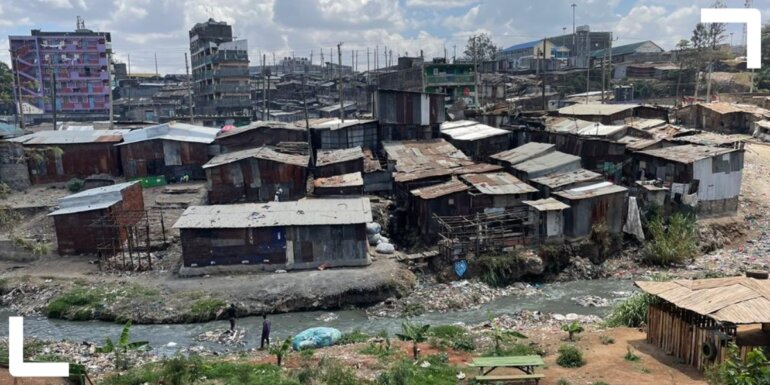
These insecurities now accompany more familiar dimensions of urban vulnerability such as irregular or inadequate access to urban services such as water and sanitation and poor environmental conditions, resulting in health insecurities; vulnerability to violence and fear of violence as cities become increasingly subject to violent crime and rule by gangs and mafias; and other forms of physical insecurity related to natural and man made disasters, including climate change and extreme weather conditions to which cities and their vast populations are particularly vulnerable, especially in the absence of strong and effective urban governance.

The aim of this panel is to discuss the relationship between cities and development in an insecure world. Theoretical, empirical and policy papers are equally invited. A major conceptual issue to be addressed is whether global, national and city level insecurities might influence the way in which cities are conceptualised and addressed in development research and policy to date. For example, does the urban bias thesis still have resonance and what does over urbanisation mean in a world where the vast majority of urban workers do not enjoy formal conditions of labour?

Empirical and policy questions might include the following. Do cities need to be factored into economic analysis as spatial entities? What are the implications of the security-development nexus for cities? What do we know about cities and climate change and what should we know? What are the challenges of an insecure world for urban health and urban environments? Are city governments up to the task of addressing multiple and intersecting insecurities and have decentralisation policies helped or hindered them in this? Are citizenship rights and an inclusive urban politics possible in insecure cities in an insecure world?  

Abstracts of 750-1000 words should be submitted to the convenors with a copy to Frances Hill (conference@devstud.org.uk). The deadline for submitting an abstract is 15th July 2008.


Background to the Conference

The year 2008 is the DSA’s 30th Anniversary and the Annual Conference will celebrate this. Huge changes have occurred during the past thirty years which have redefined development agendas and we must expect changes of similar magnitude over the next thirty years. The themes of the conference will reflect the forces likely to influence future global change and re-shape development agendas once again.

The DSA was formed in 1978 to “advance knowledge of alternative processes and methods of socio-economic change”. Since then the main focus of development studies has shifted, from debates between grand theories of global transformation linked to the ideological and political conflict of the Cold War, through the ‘end of history’ to a narrower concentration on means of achieving poverty alleviation, the Millennium Development Goals, and so on. Arguably, debate has become limited to a discussion of different degrees and modes of interventionism within a general acceptance of the dominance of liberal democracy and globalised industrial capitalism.

In the meantime, however, many other dimensions and drivers of global social change have gained in importance. Religion, security, and global climate change may be the most obvious. But just as the forces which led to the end of the Cold War may have been ‘invisible’ to those debating development theories in 1978, so we may expect that the forces which will prove to have shaped the world of 2038 are largely invisible to us. And indeed, even the more obvious new forces are still not ‘seen’ well enough by those debating development. 

Process

The day will consist of three plenaries and two breakout sessions of 75 minutes (with eight parallel panels in each). Thandika Mkandawire, Director of UNRISD, and Gautam Mody at The New Trades Union Initiative are confirmed guest speakers for the first plenary. We are in the process of pulling together another plenary session on “Alternative Ways of Financing Development – looking beyond the aid agenda”. In the third plenary, on “Guns, Gods and Greenhouse Gases”, we will be asking a number of DSA’s past presidents to bring their own ‘magic spectacles’ and tell us how they see these and other forces shaping our futures.

To establish themes for the breakout sessions, we issued a ‘Call for Panels’, where we asked questions such as: What are the influences which will shape the next 30 years of development and development studies? What are the big issues going to be in the next three decades? What comes after the MDGs? What is the reasoning behind your ideas? Who are the thinkers. movers and shakers who are beginning to see where things are going? What should we, as the development studies community in the UK, be doing to work with these less obvious actors?

We reviewed almost 30 responses, with some exciting ideas on these ‘invisible hands’ moulding development, and chose 16 panels for the parallel breakout sessions. Formats will vary. Some will involve 3 paper presentations plus discussion. In other cases, up to 5 papers will be posted on the conference website well in advance and presented very briefly (in 5-10 minutes) at the conference itself, with critical comments from discussants followed by open discussion. 

Post conference publication

Post conference publication could take several forms. Individual papers will be eligible for publication in Special Editions of the Journal of International Development and European Journal of Development Research. In some cases, a panel convenor and contributors may wish to write a joint thematic review paper following the conference, for consideration in one of these Special Issues. In addition, certain panel topics may be suitable for a group of papers to be published as a ‘Policy Arena’ in these or other journals. The organising committee will arrange a post-conference editorial system prior to any publication. 

Panels

Of the 16 panels, the first twelve are open to proposals for papers. Further details, together with contact details for their convenor(s), are on the conference website at http://www.devstud.org.uk/conference-08/abstracts.htm or click on the links below. Their themes are:

The other four selected panels are organised around particular large-scale research projects, partnerships or consortia. They are not open to paper proposals from outside. Their themes are:

Call for Papers

The first twelve panels will include papers chosen on the basis of competitive refereeing of long abstracts. We want the papers to be original, creative, provocative, and where possible evidence-based. We are particularly keen on participation by scholars and experts from outside development studies with important messages for us.

You are invited to propose a paper for one of these first twelve panels. Please refer to the detailed panel descriptions on the website to ensure your proposal is appropriate. You are then asked to submit the following to the relevant panel convenor, with a copy to Frances Hill at the address below, by 20th June 2008 (note revised date):

  • the title of the paper;

  • the name(s), email(s) and affiliations of the author(s);

  • an abstract of 750-1000 words including references.

A process for the anonymous review of abstracts will be established between the panel convenor(s) and the conference organisers. Decisions by the panel convenor(s) and/or the organising committee on the basis of expert reviewers’ reports will be subject to the usual ‘editorial conditions’. Selected papers will be notified by 14th July 2008. Full papers (5000 words) should then be submitted for posting on the conference website by 15th September 2008.

Summary of Important Dates

  • Deadline for 750-1000-word papers abstracts - 20th June 2008

  • Selected papers will be notified by - 14th July 2008

  • Full papers (5000 words) to be submitted by - 15th September 2008.

Contact

Information and Queries should be directed to:

Frances Hill
Executive Director
Development Studies Association
POB 108
Bideford
Devon EX39 6ZQ
UK

Telephone: 01288 331360
Email: conference@devstud.org.uk


Abstracts should be sent to the relevant Panel Convenors with a copy to Frances Hill on conference@devstud.org.uk


Page last updated: 9th May 2008