
How gender-transformative teaching could help improve boys’ engagement and learning
Training has begun in 11 Malawian schools to tackle boys’ disengagement from education, as part of collaboration between UNESCO–DEV–Equimundo to keep boys in school.
A worrying trend is that boys in many Lower and Middle Income Countries are increasingly falling behind in school and dropping out. New research is looking at gender-transformative approaches to make schools inclusive for all.
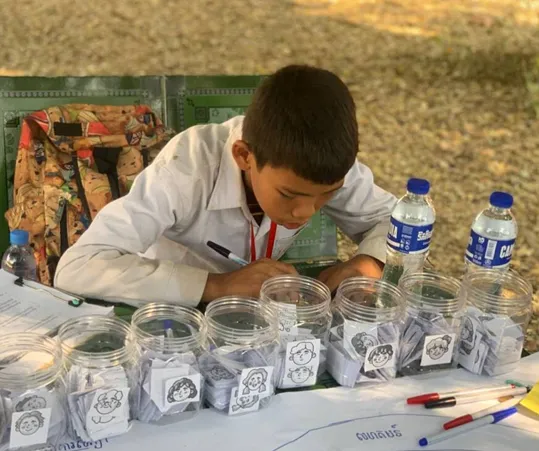
This September, 11 schools across four districts in Malawi began training teachers and community facilitators to deliver a gender-transformative programme aimed at keeping boys in school, while supporting gender equality more widely. Over the school year, they’ll pilot gender-responsive teaching, classroom dialogue on gender norms, boys’ clubs, and structured work with parents.
This UNESCO–DEV–Equimundo collaboration responds to a growing pattern in several LMICs: boys are increasingly repeating grades, under achieving and dropping out. Harmful norms around masculinity make schooling feel irrelevant, despite the long-term risks of early exit: poorer health, unemployment and greater exposure to crime.
The project learns from approaches that have helped address girls’ participation and applies them in contexts where boys are also at risk of dropping out.. It uses a participatory design so boys, girls, teachers and communities co-produce solutions.
“We’re taking much of the same gender-sensitive approaches that have been so successful in supporting education for girls and using it now to understand gender norms that push boys to disengage and drop out of school early”, said Associate Professor Catherine Jere.
Project aims:
- Shifts in attitudes to gender roles and learning
- Better engagement and reduced dropout
- More inclusive school cultures that support both boys and girls
Malawi is one of three countries in the research collaboration, with Cambodia and Lesotho also involved. Learning from Malawi’s full-year pilot will inform practices in these other partner countries and beyond.
The current project is already feeding into global guides and policy recommendations to train teachers on gender transformative teaching, with a focus on masculinities