
Paul Mosley: An appreciation
05 April 1947 – 18 February 2026
It is with sadness that we report the death of Professor Paul Mosley, President of the Development Studies Association from 1998 until 2001
Professor David Hulme, former DSA President, worked closely with Paul and reflects on his immense contribution to Development Studies:
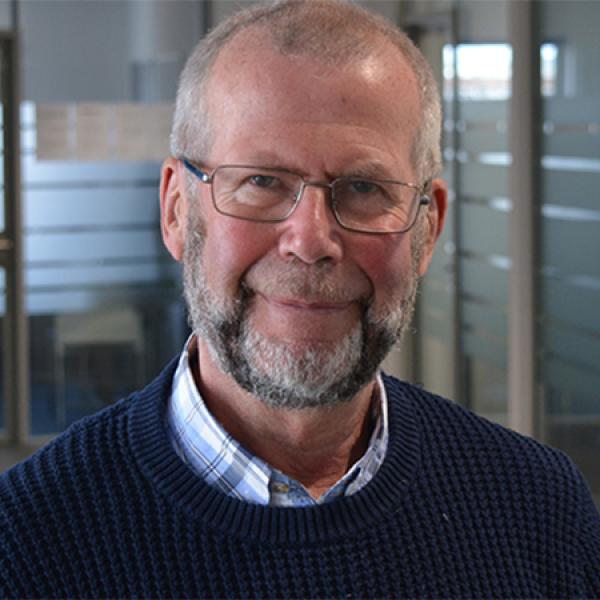
Professor Paul Mosely was an internationally recognised scholar of development economics, holding positions at the universities of Strathclyde, Bath, Manchester, Reading, and Sheffield over his long career. Paul was also deeply committed to improving the efficacy of foreign aid and national development policies, working as a professional economist for the UK’s Overseas Development Administration early in his career and as an advisor to NGOs and international agencies, including the UN and OECD. Motivating all his work was Paul’s passionate and energetic desire to make the world a better place, and especially to help improve the livelihoods of poor people in Africa.
At the University of Manchester in the 1980s and 1990s, Paul Mosley made major contributions to both the University and to international development policy, transforming the University’s Department of Administrative Studies for Overseas Visiting Fellows from a neo-colonial, aid-dependent, training and consultancy unit into a research and post-graduate education institute . His personal research became very policy-focussed and closely related to his founding role in an influential think-tank, the Independent Group on British Aid. He was also a Trustee at ActionAid, helping the organisation advocate for better international development policies in the UK, EU and World Bank.
He authored several books including Foreign Aid: its Defense and Reform (1987) at a time when the UK government was reducing its aid budget ; the two-volume Aid and Power (1995), with John Toye and Jane Harrigan, which provided a highly original analysis of World Bank and IMF policy conditionality and its poverty-creating consequences; and, the two-volume Finance Against Poverty (1996), which we co-authored, challenging the widely claimed role of microcredit in poverty reduction.
During his time at Sheffield, Paul’s research and publications broadened. Poverty and Social Exclusion in North and South (2005), with Elizabeth Dowler, was innovative in contrasting poverty and poverty reduction approaches in high-income and low-income countries. The Politics of Poverty Reduction (2012) moved on to looking at how the conditions for the application of evidence to policy practice could be created. And, with Barbara Ingham, Paul wrote Sir Arthur Lewis: a Biography (2012), building on their scholarship and Paul’s detailed primary research in Manchester interviewing Lewis’s social activist colleagues.
Alongside his personal research Paul Mosley took on an intellectual lead in shaping the emerging discipline of Development Studies. This included serving as President of the UK’s Development Studies Association (DSA) from 1998 to 2001 and editing the Journal of International Development for more than 25 years. Paul was keen for development economists to work with social scientists from other disciplines. He knew that effective policy formulation and implementation required cross-disciplinary analysis, but he struggled as the Economics discipline in the UK followed Economics in the USA: highlighting assumption-based, neo-liberal, mathematical models tested on datasets that were often of questionable reliability. He did not follow the Economics ‘herd’ but continued to work with colleagues from other disciplines (politics, sociology, nutrition and others), to adopt Q-squared research methodologies (integrated quantitative and qualitative methods) and to undertake primary data-collection. This became unfashionable in Economics: but if you wanted to know why poor people or policymakers did something then why not ask them ‘why’ yourself?
If you have a minute go to the library (Paul loved real books) and look at Aid and Power or Finance Against Poverty or Sir Arthur Lewis to appreciate his contributions to knowledge and action. Throughout his life Paul ‘broke the mould’ of a traditional academic with his innovative thinking, passionate teaching, contributions to improved aid policy and wide-ranging interests. He will be greatly missed by family, friends, academic colleagues and the thousands of students he taught over his well-lived life.
Our thoughts are with his colleagues, friends, family, his wife Helena, children Francesca and Nick.