
Our Aims and Objectives
We are the UK association for all those who research, study and teach global development issues
Find Out More
The call for papers closed on 30 December at 23:59 GMT and the conference received 1078! proposals. Consequently, the number of session allocations detailed below is carefully calculated to ensure the conference will fit within the time and space constraints we face.
All proposals MUST be made via the online system including those from Convenors, Discussants and Chairs. If you forgot to send in a proposal to your own panel and wish to do so, please send us an email and we will facilitate the process.
The Call for Funding is now CLOSED
All roundtables can have one session, except R10 which will have two sessions. Each session usually consists of a maximum of four proposed contributions. Roundtables may accept more than four ‘contributions’ per session, if you are sure that you can still deliver a good roundtable discussion with more than four contributors within the time-frame of one session (90 mins).
Panels with up to 9 proposals can accept four of them (and will be allocated one session) and should set the others to transfer or reject.
Panels with between 10 and 13 proposals can accept up to eight of them (and will be allocated two sessions) and should set the others to transfer or reject. If you accept four papers only, you will be allocated one session. If you accept five, six or seven papers only, you will be allocated two sessions but will be expected to consider transfers when the process opens.
Panels with between 14 and 18 proposals can accept up to 12 of them (and will be allocated three sessions) and should set the others to transfer or reject. If you accept between nine and 11 papers, you will be allocated three sessions but will be expected to consider transfers when the process opens.
Panels with between 19 and 32 proposals can accept up to 16 of them (and be allocated four sessions) and should set the others to transfer or reject. If you accept between 13 and 15 papers, you will be allocated four sessions but will be expected to consider transfers when the process opens.
Please set to transfer any proposals you feel are still of high enough quality but do not fit well your panel or that you cannot fit in your session allocation but might find a better home in another panel. Only set to reject those proposals that you feel are not of a high enough quality in general for the conference.
NUMBER OF SESSIONS
Your panel is allocated an appropriate number of sessions based on the number of proposals received (see section above) and the number of proposals you accept. You do not need to email to request a double/ triple session. The allocations will be as follows:
Your panel session allocation may change slightly once paper decisions have been made and we’ve sorted the transfers.
MULTIPLES
Please note there were no multiple paper proposals allowed this year. Each participant is allowed to propose one paper proposal to one panel and one roundtable contribution to one roundtable. This means that the authors have only chosen your panel or roundtable for their paper or contribution. We believe this makes their choice more meaningful and encourages you to consider them with that in mind.
Link to the email with instructions.
You can view and mark up individual paper proposals by going to the conference management page and clicking the pencil icon on the left of the panel reference, under “Edit”.

N.B. the papers listed on this page under the list of panels are your (co)authored papers, not the panel’s proposed papers.
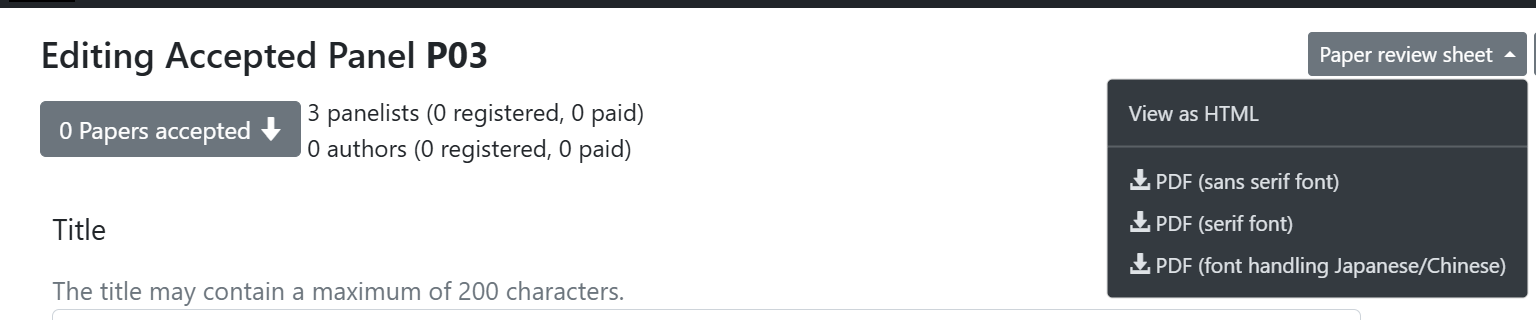
To read all proposals received easily, click the ‘Paper Review Sheet’ button at the top of the page, to download a PDF of all the proposals.
The call for papers was public, so you may have received proposals from people you do not know: please treat all proposals as equally as you can, and do not only accept the proposals you have solicited directly.
At the bottom of the page you will see five coloured boxes with options for the proposals.
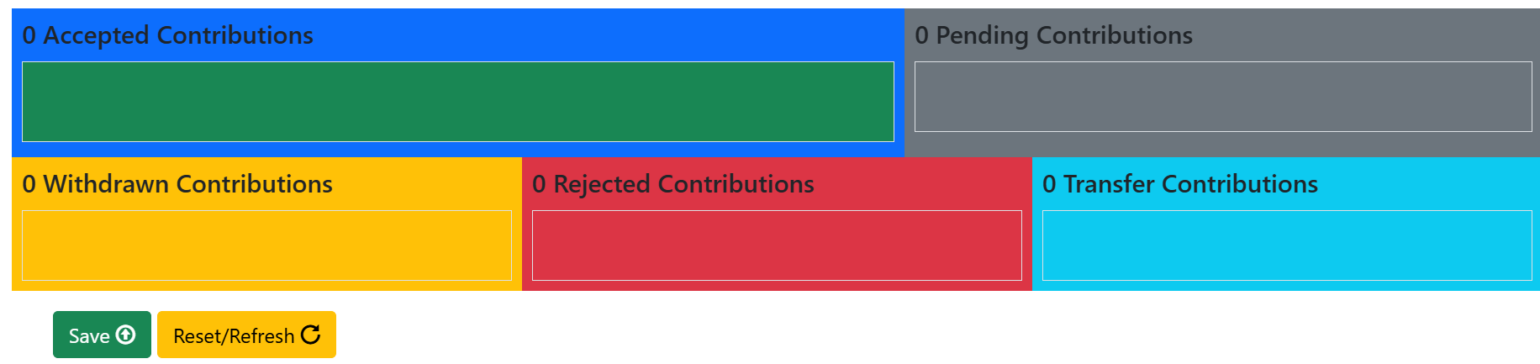
All the proposals will start in the grey ‘Pending Papers’ box. You can drag and drop papers to the different boxes depending on your decision, then click on ‘Save’ to finalise the decision. You can also click on ‘Reset/Refresh’ if you want to start over. Please drag the proposals into the order in which you initially wish them to be presented.
Accepted – obviously – is for the proposals you wish to accept into your panel. Use that only for the proposals that you wish to retain in your panel.
Rejected is for proposals you feel do not have a high enough scholarly quality to retain a place in the conference. Please don’t set proposals to transfer if you actually don’t think they have a chance – it’s unfair to put colleagues through the transfer process if the paper is unlikely to merit a place.
Withdrawn is for when authors inform you or us that they are no longer able to proceed with that proposal or attend the conference. They do not always email us with this news so if you receive such information later in the process, please remember to move their proposals to ‘Withdrawn’, so that we know, too.
Transfer is for proposals you would like to accept but don’t have space for, or don’t wish to accept perhaps because they aren’t on your theme, but feel should be included somewhere in the conference.
Within the permitted limit, we advise you to accept papers that you consider to be of high academic quality, pertinent to your panel’s theme and, ideally, representing a diverse range of approaches.
Use transfer only for rare exceptions – abstracts that truly stand out, but do not fit your panel.
We will try to rehouse the transfer proposals in other panels. Please do not set anything to transfer simply because you feel bad about rejecting – It is kinder, in many instances, to simply reject a paper.
Please mark up all proposals by 20 January, do not leave any as ‘pending’. After moving all proposals, click on the ‘Save’ button beneath the list. All accepted proposals will immediately show on your public panel page on the conference website, beneath the panel abstract.
When you mark up a proposal, the decision will show in the author’s account. However the system does not send an email to the author alerting them of the status change, so please do your colleagues the courtesy of sending them an email informing them of your decision.
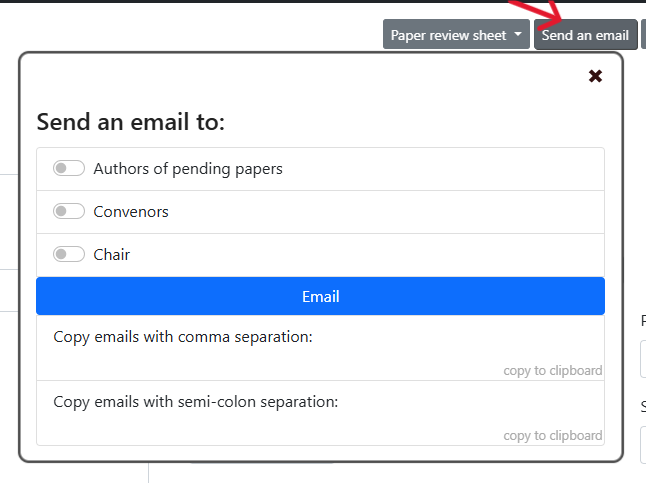
To make this easier click the ‘Send an email’ button at the top of the panel edit page and choose which subsets of authors you wish to write to, and which method you wish to use to generate an email.
Once you have made all your decisions on the proposals to your panel by 20 Jan we will move into the transfer process (we conduct this process liaising with panel convenors and the transfer proposal authors).
The transfer process works similarly to the Call for papers, but is limited to papers marked as ‘Transfer’ and panels set as ‘Open for Transfers’, and has one round. This allows authors one more attempt to successfully rehouse their work.
Please note the short time window (14 days) we have to finalise the transfer process and do try to communicate promptly your decisions (if your panel has spaces to accept transfers) and/ or other changes to proposals in your panel during this period. If any of your transfer authors are accepted to another panel during the transfer process, they will no longer appear on your panel page. If they are not able to be re-homed in another panel, then they will be marked as “withdrawn” on your panel page.
If a paper you initially accepted is withdrawn for any reason, and transfer papers have not yet been re-homed, you can go ahead and accept a proposal from among those you originally set to transfer.
In the spirit of inclusion, we do expect panel convenors with available space to be open to giving ‘new homes’ to thematically relevant abstracts.
When all convenor decisions have been made and transfers done, we will allocate your panel the appropriate number of sessions.
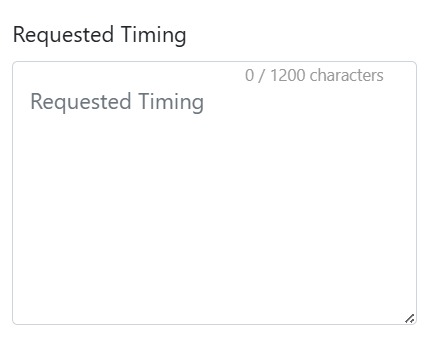
If you are aware of any limitations to the timetabling of your panel, you will be able to state this in the system. We will send some detailed instructions on how to make a request in the available box, and what this should include, so please hold back from making requests at this stage if you can.
In the meanwhile, we recommend sending a quick round of emails – sometimes authors have pressing reasons to request for the panel to avoid a certain day, and it is a good idea to negotiate this before informing us. Note that we are already aware via our software of participants’ roles as convenors, presenters, chairs or discussants in various sessions, so you do not need to inform us.
Please meet the requested deadline (20/01), as this affects all the proposers and all the panels – we will not be able to start the transfer process, or announce the Call for Funding, before all papers have been marked up.
If you have questions about any of the above, do not hesitate to contact conference(at)devstud.org.uk