Study Groups

China and Development

China has moved rapidly to a position of greater prominence on the global stage in the context of the financial crisis. Despite severe domestic economic reversals, with serious political and social ramifications, China’s economic strength as the world’s third largest economy coupled with large foreign exchange reserves makes it a key player in addressing global economic imbalances. This also ensures its growing influence in reshaping the institutions of global governance and places it at the heart of many new alliances and groupings.


China’s rise thus has implications which extend far beyond its borders, affecting developed and developing countries alike. It is met with both admiration and suspicion. In this context, it is worth considering how China’s response to crisis, and its prospects for recovery and restructuring, might affect a wider development agenda, both through China’s direct engagement with developing countries and other emerging economies, and by changing the environment in which ‘traditional’ donors and development actors operate.


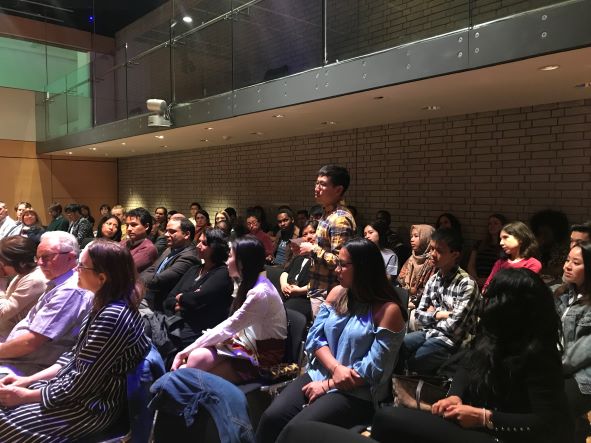
The Roundtable was the first event of the Development Studies Association’s ‘China and Development’ Study Group. A distinguished panel of academics and development practitioners met to address a set of questions exploring aspects of China’s rise and implications for the development field.


Adrian Davis, Head of DFID North East Asia, gave various perspectives from the UK donor side. He noted that China is both a developing country and a great power, which sets up challenges and contradictions in its policies. In particular China does not think of itself as a donor, but rather offering ‘South-South’ cooperation. Although China prefers bilateral relations there are signs of a willingness to engage with other donors and Mr Davis highlighted various initiatives that the UK government and China were engaging in.


Raphie Kaplinsky, Professor of Development Studies at the Open University, argued that China’s industrialisation and urbanisation trajectory suggests that it will still demand the commodities that many developing countries produce. He went on to outline how we tend to focus on these demand dynamics and ignore how China as a producer of more appropriate technologies can benefit developing countries. These technologies are, what he called, ‘below the radar innovations’ and could transform the lives of poor consumers in Africa and elsewhere.


Richard Dowden, Director of the Royal African Society, picked up on the Africa theme and argued that the key issue for China-Africa relations is African politics.  China is, he believed, the largest external actor in Africa and its goods are much cheaper than more advanced industrial economies. Its aid also permits African states to make choices vis-à-vis other donors. Longer term Mr Dowden argued China will have to engage more with local African politics while internationally China is ‘embarrass-able’ and so can be influenced multilaterally.


Finally Dr Sarah Cook, of IDS, examined China’s internal development and how this influences its external relations. She argued that China’s development is not a single ‘model’ but many models. There are also competing interests within China which affects how it engages with poorer countries as well as how open it is to change.


The study group will be organizing study days and postgraduate events in the coming year.


Convenor
Giles Mohan
g.mohan@open.ac.uk