
Lived experience is expertise
Madhuri Kamtam on equity and inclusion in academia
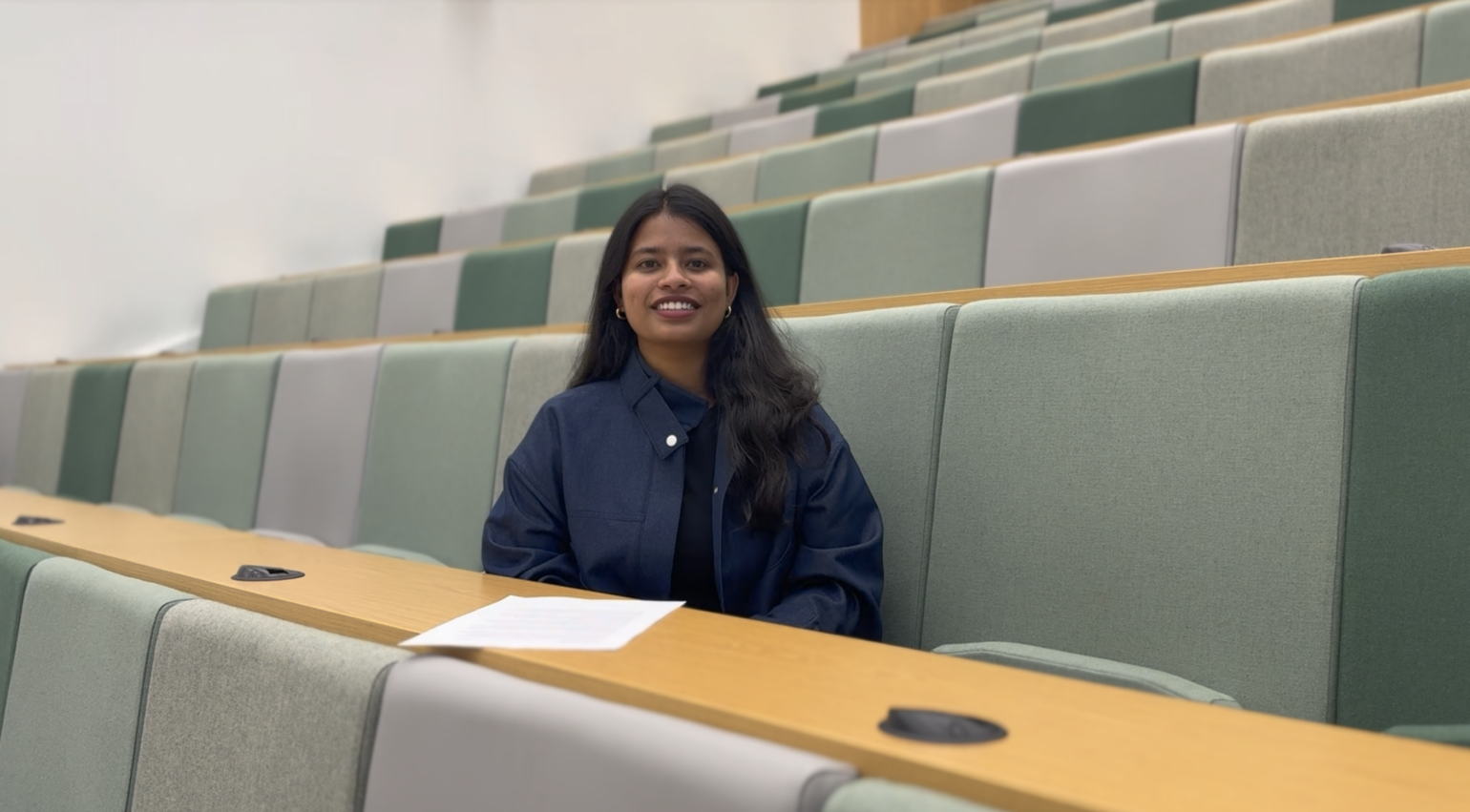
“Ten years ago, I was just finishing college in India,” says Madhuri Kamtam. “And here I am, conducting workshops in a foreign country, working on a project… that I am very deeply passionate about.” A recent PhD graduate, Madhuri is reflecting on her role leading the DSA Equality, Diversity, and Inclusion (EDI) workshops, a project part-funded by the Academy of Social Sciences. The workshops spanned the UK, bringing together racially minoritised Early Career Researchers (ECRs) to interrogate whether EDI initiatives are truly delivering the support they promise.
Despite her leadership role, the transition was not without its internal hurdles. “Imposter syndrome was definitely there throughout,” she confesses. “I think that is something that a lot of people, especially in academia, but also if you are a racially minoritized or located researcher, constantly feel like: maybe I’m overstepping, maybe I am not allowed to say something. That is always there at the back of my mind.”
Positionality as power
Rather than letting these doubts act as a barrier, Madhuri leaned into her identity as a Dalit woman and first-generation learner. She transformed her perspective from a perceived “limitation” into a vital form of academic expertise.
“I brought that lived experience into the project. And I think during the workshops, I felt that this is actually creating this sort of trust and safe space for researchers to feel relatable and able to talk about different issues around visa precarity or different exclusions and experiences of marginalization.”
This sense of imposter syndrome is a collective experience. In a separate DSA blog, Chidinma Mbaegbu noted that a comment from Naomi Hossain during the workshops helped her realize she had been “waiting for permission” to be visible in academic spaces.
The burden of representation
For racially minoritised researchers, there is often an added weight: the responsibility of trailblazing and the exhausting labor of self-justification.
“When I was drafting the report, I was like, this is a big responsibility… Some days I would feel overwhelmed… and I would just realize this is real. I am supposed to be writing this report, and I should just write it, and I should analyze the data, and it’s going to make an impact. I think most of the step were just trying to believe in myself.”
This internal battle is compounded by an external one—the constant need to validate one’s presence in traditional institutions.
“Oftentimes in spaces where there’s discussions around race and caste and class, it’s this constant justification of why these issues matter. You have to constantly justify why your presence matters, why your space matters, why your opinion matters, and why that inclusion is important. So in some ways, I’ve had to deal with that my whole life, on a personal level and in academic spaces. So it’s almost like I’ve been trained up to that in some ways, to navigate these conversations and discussions.”
Challenging the “hidden curriculum”
Madhuri’s workshops revealed a stark disconnect: while formal EDI schemes exist, they often miss the “hidden curriculum” – the informal mentoring and support networks that many racially minoritised researchers are excluded from. She calls on established academics to bridge this empathy gap by remembering their own early struggles.
“What was it like when you were doing a PhD? It’ll never be the same experience, but really trying to provide support in a genuine way is important. Time and time again in my experience and in my peers’ experiences, it felt like they just don’t get it. You talk about the issues, various problems that you’re facing – writing up your thesis, feeling like you’re not good enough, not getting a job – and I always felt like they didn’t really understand what it meant. A lot of them do not know right now how terrible the job market is.”
The peril of precarity
This lack of understanding is particularly acute regarding visa precarity and the financial “cliffs” ECRs face after graduation.
“You finish a PhD and then you lose your student status… and then you don’t have any support from universities in paying your article processing charges with journals. Suddenly after three or four rounds of revisions on a publication, you get a surprise saying that you have to pay £1,600 to get this published, and you are in the thick of precarity… It was pretty clear from the workshops… that relational infrastructure and the care and community aspect was the most missing piece in a lot of university spaces.”
For Madhuri, the solution starts with practical, compassionate mentorship. “If you think someone is not doing good enough in analysis, provide them with support,” she urges. “Don’t just criticise them and send them home where they would be crying their way.”
EDI with impact
The impact of Madhuri’s work is already being felt. With the DSA she has authored an extensive report on the realities facing racially minoritised ECRs, and workshop participants have shared that they feel listened to and less isolated, some for the first time. Some of them are forming their own networks to support each other moving forward.
Recognising that this work has been a privilege, Madhuri offers a final piece of advice to other researchers navigating the same precarious waters: stop waiting for the feeling of being “ready.”
“I made a pact to myself that I’m going to be as innovative as I can in terms of applying for jobs. I will take advantage of different opportunities that come in the way… I would definitely urge racially minoritised or located researchers out there to believe in yourself and put yourself out there. And I think [people feel] like, one day I’m going to be ready for a role like this. I think there’s no such thing. Most people never feel ready for opportunities. I think now is the time.”
About Madhuri Kamtam
Dr Madhuri Kamtam recently completed her PhD at the School of Global Development, University of East Anglia, and worked as a Research Associate on the DSA EDI project, contributing to research, communications, and events. She is an Associate Fellow of the UK Higher Education Academy (AFHEA) and a Yale University Academics Stand Against Poverty (ASAP) Fellow.
Her research interests focus on labour, gender, caste, migration, and the political economy of development, approached through an intersectional feminist lens. Her doctoral research examined the impact of beedi (hand-rolled cigarette) labour legislation on workers’ welfare in India, using mixed methods, the capabilities approach, and extensive fieldwork.
Alongside her doctoral work, Madhuri has contributed to projects on international students, belonging, diaspora, and equity, diversity and inclusion in higher education. Drawing from both research and lived experience, she is deeply committed to creating more inclusive and supportive academic spaces for racially minoritised and marginalised communities.