What Delhi’s villages teach us about development
By Puneet Singh Singhal, Founder/Curator, Dilli Dehat Project
Development often asks cities to look forward. But in Delhi, looking forward without looking beneath our feet risks repeating a familiar violence: the erasure of villages that made the city possible.
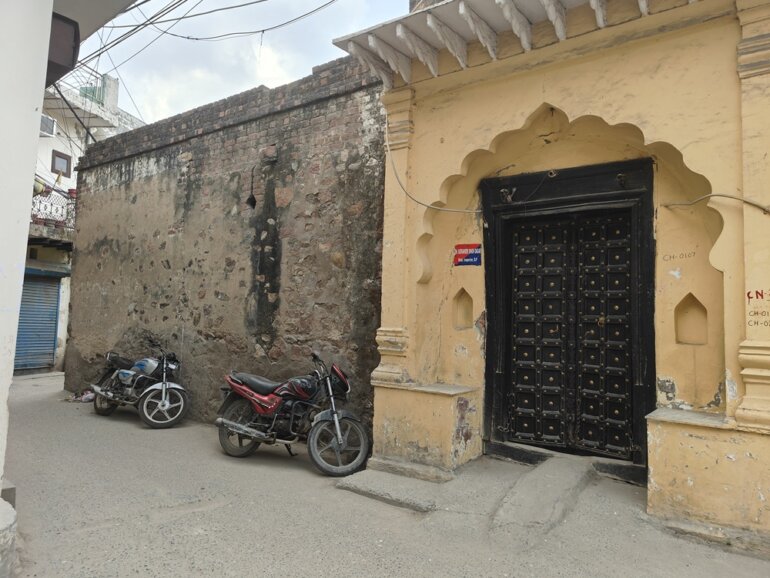
Delhi is usually remembered through empires, monuments, master plans, and markets. Yet another Delhi continues to exist inside and beneath the metropolis: the Delhi of villages, or Dilli Dehat. These are not merely remnants of a rural past. They are living sites of land, labour, caste, ecology, memory, faith, and displacement. Through the Dilli Dehat Project, I have been documenting oral histories, photographs, village deities, rituals, dried johads, ridge commons, chaupals, old houses, and everyday cultural practices that reveal a different history of urban development: one told from the communities whose lands were absorbed, renamed, planned over, or forgotten. The project has been described as an online archive of Delhi’s “300-odd villages” and their rural soul.
This matters for development studies because Delhi’s transformation was never simply a story of growth. It was also a story of unequal conversion: agricultural land into colonies, commons into enclosed property, sacred routes into regulated access, and community memory into silence. The Government of Delhi’s Urban Development Department itself notes that rapid urbanisation converted rural villages into 135 urban villages, where chaupals once central to social and cultural life became neglected.
The word “urban village” can sound neutral, even administrative. But for many communities, it describes a condition of being neither fully recognised as rural nor properly served as urban. Villages often lost fields, grazing lands, water systems, and livelihoods, but did not always receive infrastructure, documentation, heritage protection, or meaningful participation in planning. They became internal peripheries inside the capital.
Devli, my own village in South Delhi, illustrates this contradiction. A recent account of Devli describes the demolition of the village’s first pucca house, the bangla, which stood near the old chaupal and symbolised a transition from mud architecture to permanence. Its loss was not just architectural. It was the disappearance of a social record: of how homes, cattle, gendered spaces, agrarian labour, and community life were organised before the city pressed in.(3)
The Aravalli Ridge tells another part of the story. In Devli, Mahamai’s shrine sits on the Aravalli Ridge, a sacred landscape tied to community memory, mourning, and collective worship. Yet villagers now face conditional access, permissions, and surveillance in spaces their ancestors sanctified and cared for. A landscape once shared through faith, grazing, fuel, water, and ritual has become a bureaucratic boundary.
This does not mean environmental protection is unimportant. It means conservation must ask who is being protected from whom. Community relationships with nature are not always threats to ecology; in many cases, they are forms of ecological stewardship. When planning separates “green space” from the people who historically lived with it, it risks reproducing colonial ideas of nature as empty, governable, and separate from society.
The longer history of Delhi confirms this pattern. From the 1911 Delhi Durbar to the construction of New Delhi, from Partition rehabilitation to postcolonial planned colonies, village land repeatedly served the needs of empire, state, and capital. In my writing on Dhaka, Hauz Khas, Mehrauli, and Burari, I have argued that Delhi did not expand into empty space; it expanded through inhabited landscapes of homes, fields, wells, shrines, water systems, and memories.
Today, this question remains urgent. The Delhi Development Authority continues to host materials for the Draft Master Plan for Delhi-2041, while reporting on the plan has highlighted concerns that future planning may overlook informal workers, marginalised communities, and those whose livelihoods depend on land and riverine ecologies.
The Dilli Dehat Project is a community-led archive asking a development question: who gets to define progress, and whose losses are treated as acceptable? If Delhi’s villages are remembered only as obstacles, encroachments, or picturesque leftovers, the city will continue to reproduce injustice while calling it planning.
A more ethical urban future would treat villages as knowledge systems. It would document chaupals, johads, shrines, old houses, oral histories, caste relations, labour practices, and ecological commons as part of Delhi’s development record. Delhi cannot build a just future by forgetting the ground it stands on. Development must not only ask what cities need next. It must also ask what cities have already taken, from whom, and how those communities can regain authorship over their own stories.
Puneet Singh Singhal is the Founder/Curator of Dilli Dehat Project, a community-led archive and storytelling initiative that documents the rural histories, cultures, and lived realities of Delhi’s villages.